
This guide is written for business buyers. Confirm product applications, technical data, commercial terms and market requirements with the selected supplier before ordering.
Choosing an automotive filter manufacturer is not only a price comparison. Importers, distributors and private-label buyers also need dependable product identification, consistent specifications, clear packaging requirements and a practical quotation process. A low unit price can become expensive when OE references are mismatched, samples are not approved, or packaging details are confirmed too late.
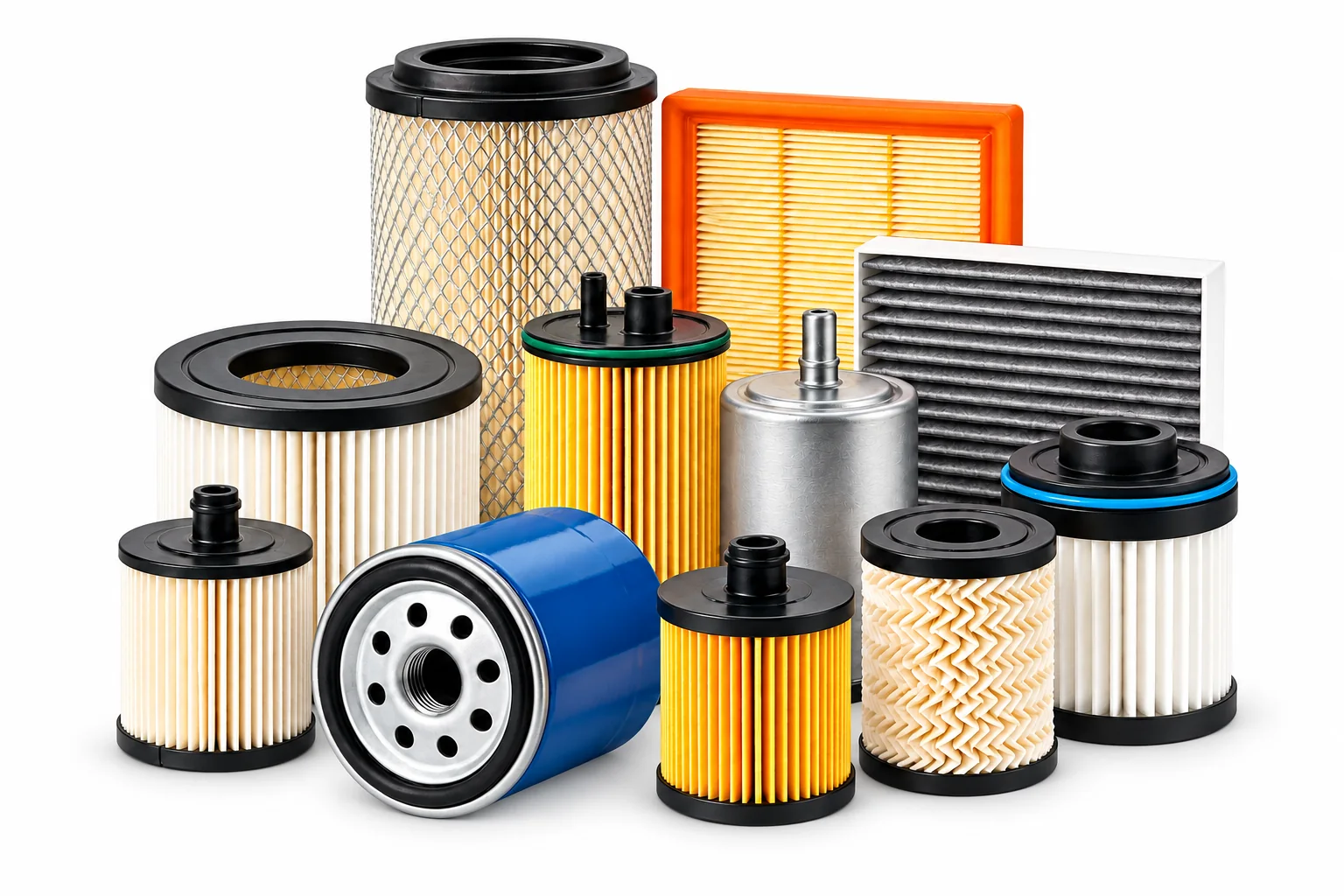
This checklist helps B2B buyers compare suppliers of air filters, oil filters, fuel filters and cabin air filters. Use these questions to shortlist manufacturers before requesting samples. For the next stage, our eight-check supplier evaluation guide focuses on the evidence to review before a first purchase order.
1. Can the supplier verify every OE/OEM reference?
Send the supplier a structured list containing the OE/OEM number, vehicle make, model, engine, model year and destination market. Ask the team to separate confirmed matches from items that still need a photo, drawing or sample. A responsible supplier should not treat an uncertain cross-reference as confirmed.
2. Does the product range fit your sales program?
Some buyers need one fast-moving category; others need a mixed range across passenger cars, commercial vehicles and heavy-duty applications. Confirm which references are currently available and which require development. For a mixed order, request a category-by-category summary so missing items are visible before quotation approval.
3. Which specifications will be confirmed before production?
Ask for the dimensions, thread or connection details, gasket measurements, media type and other relevant construction data. The required fields vary by filter category. Compare the specification sheet with your sample, drawing or trusted application data before approving an order.
4. How are samples and first-article approvals handled?
A sample should represent the specification you intend to buy. Define who approves the sample, which measurements are checked, and whether the approved sample or signed specification becomes the reference for production. Record any agreed changes instead of relying on chat messages alone.
5. What quality-control evidence can be provided?
Ask what checks apply to incoming materials, in-process production and finished products. Request documents that are relevant to your order, such as inspection records, dimensional reports, traceability information or packaging photos. Avoid assuming that a generic certificate proves every claim for every SKU.
6. Can batches and nonconforming products be traced?
Traceability helps both parties investigate complaints and isolate affected goods. Confirm how production batches, inspection records and packaging codes are linked. Also agree on the process for reporting a nonconformity, supplying evidence and determining corrective action.
7. What OEM and private-label options are available?
For OEM automotive filters or private-label filters, clarify logo use, label content, box artwork, carton marks, barcodes and language requirements. Decide who supplies final artwork and who approves pre-production samples. Do not print unverified performance or certification claims on packaging.
8. Are MOQ and mixed-SKU rules clear?
Ask for minimum order quantities by SKU, packaging method and total order value. If you plan a mixed container or mixed pallet, confirm how many references can be combined and whether different packaging designs change the MOQ. This prevents attractive quotations that cannot be converted into a workable purchase order.
9. Is the quotation comparable line by line?
A useful quotation identifies each reference, unit, quantity, packaging, price basis, sample status and validity period. Freight, tooling, artwork, labeling and testing costs should be separated where applicable. Compare like with like instead of comparing one complete offer with another offer that excludes important items.
10. Are lead times and order milestones documented?
Request separate timing for cross-reference verification, samples, packaging approval, production and shipment preparation. Lead time should be tied to clear starting conditions, such as deposit receipt and final artwork approval. For urgent programs, prioritize verified references rather than forcing uncertain items into the first shipment.
11. Can the supplier support export documentation and packing needs?
State the destination country, required shipping marks, carton limits, pallet rules and document requirements at the RFQ stage. Importers should confirm customs and regulatory requirements with qualified local advisers; a filter supplier should not invent compliance statements for a market it has not verified.
12. How responsive is the technical and commercial communication?
Good communication is measurable. Look for complete answers, version-controlled quotations and clear lists of open questions. Compare how each supplier records missing information, assigns follow-up actions and confirms when an open question has been resolved.
A practical supplier comparison scorecard
| Evaluation area | Evidence to request | Main risk addressed |
|---|---|---|
| OE/OEM matching | Confirmed reference list with exceptions | Wrong application |
| Specifications | Drawings, dimensions or approved sample | Fitment inconsistency |
| Quality control | Relevant inspection and traceability records | Uncontrolled variation |
| Private label | Approved artwork and packaging sample | Branding errors |
| Commercial terms | Line-by-line quotation and MOQ rules | Hidden cost |
| Delivery | Milestone-based schedule | Missed launch date |
What should you include in an automotive filter RFQ?
- OE/OEM or cross-reference number
- Vehicle make, model, engine and year when available
- Filter category and required quantity by SKU
- Destination market and preferred Incoterm
- Packaging, logo, label and barcode requirements
- Photos, drawings, samples or existing catalog data
- Target sample and delivery schedule
A structured RFQ reduces back-and-forth and makes supplier offers easier to compare. If some information is unavailable, mark it as unknown instead of guessing.
Frequently asked questions
What is the difference between OEM, private label and aftermarket filters?
OEM stands for original equipment manufacturer. In automotive sourcing, distinguish original-equipment supply from manufacturing a product to a buyer’s specification. Private label describes the buyer’s brand and packaging; aftermarket describes the replacement market. Ask what the supplier means by ‘OEM’ and confirm the exact product specification and any claimed approvals.
Should B2B buyers approve samples before a bulk order?
For a new supplier, new reference or customized package, sample approval provides a documented checkpoint. The approval criteria should be written and connected to the final production specification.
Is the lowest filter price usually the best offer?
No. Compare the complete cost and risk: verified references, specification control, packaging, MOQ, rejects, communication and delivery reliability all affect the result.
Can one supplier cover air, oil, fuel and cabin filters?
A broad catalog can simplify purchasing, but coverage should still be verified SKU by SKU. Ask for a gap list and separate confirmed products from development requests.
Build a clearer filter sourcing request
Haolincfilter supports international buyers with product-reference review and quotation coordination across automotive filter categories. Browse the automotive filter catalog or send your OE/OEM list with quantities, application data and packaging requirements. The team will identify which items can be quoted and which details still need confirmation.