
This guide is written for business buyers. Confirm product applications, technical data, commercial terms and market requirements with the selected supplier before ordering.
After shortlisting a potential filter manufacturer or wholesale partner, importers need to check the documents behind the first order. Use these eight checks to connect the quoted part numbers, sample approvals, packaging files and purchase order to the same agreed specification. Keep an approval record for each SKU so unresolved questions remain visible before the order is released.
Buyer takeaway: request evidence and written confirmation for the exact part numbers and order conditions you plan to buy. Do not infer fitment, quality results, certifications, or factory capabilities from a general sales statement.
1. Confirm the product scope and reference data
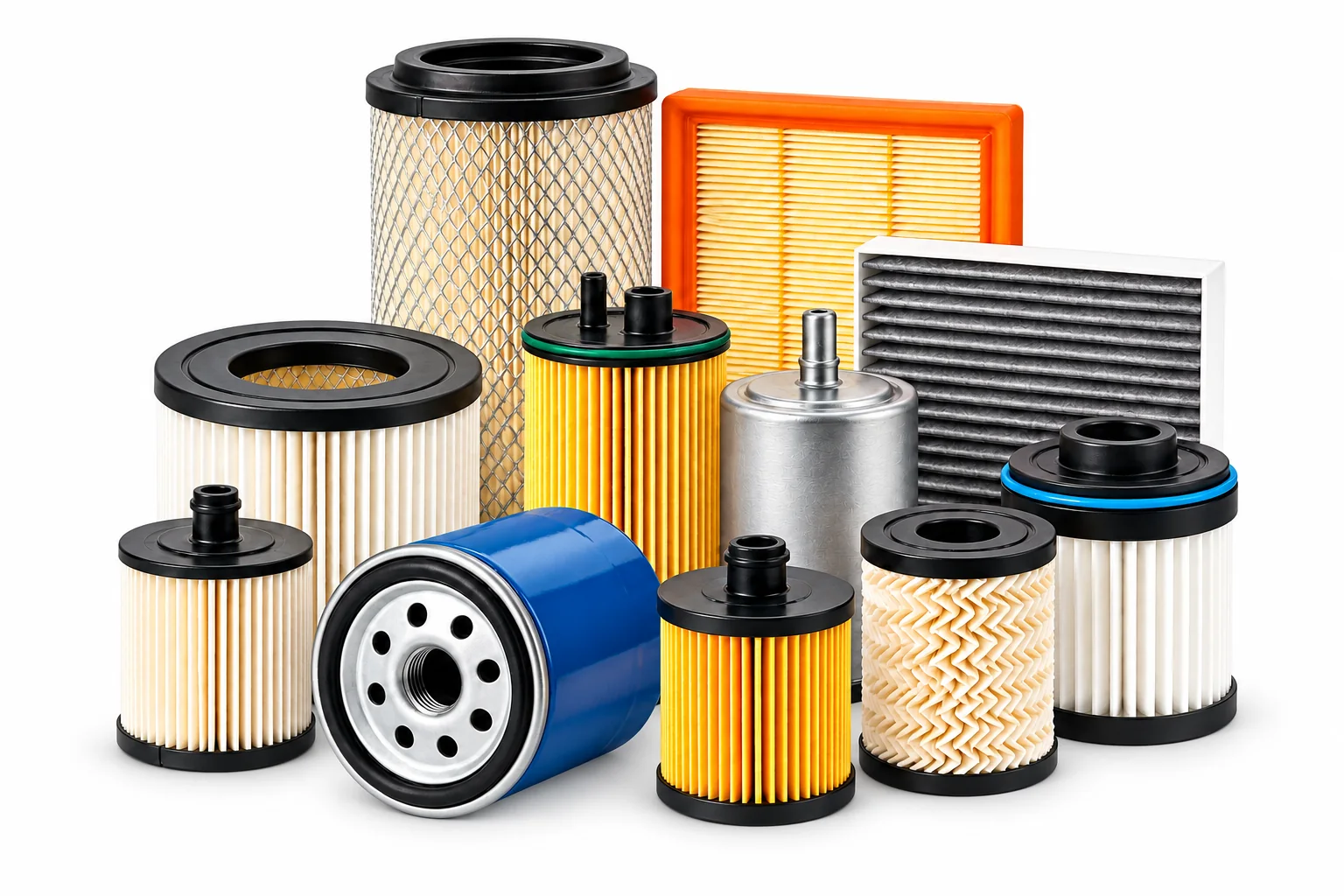
Start with a structured list of the requested air, oil, fuel, or cabin air filters. Include OE/OEM references, your internal SKU, available application data, and the source of each cross-reference. Ask the supplier to flag unverified or conflicting references instead of silently treating them as confirmed. You can browse the relevant air filter, oil filter, fuel filter, and cabin air filter catalogs while preparing your list.
2. Check how specifications and revisions are controlled
Compare the part number and revision on the quotation, sample record, specification, packaging artwork and draft purchase order. Record the document date, who reviewed it and any accepted differences. If a specification changes, require the change to be stated and approved before it is applied to an order.
3. Define the sample and approval process
Before sampling, agree on what the sample represents and how it will be identified. Confirm the reference number, quantity, shipping responsibility, and any charges in writing. Your team should define its own inspection points and acceptance criteria; a sample review does not by itself prove every production unit will match.
4. Ask for relevant quality records—not broad promises
Ask what product-specific inspection or documentation can be supplied for the items you are considering, and when it is available. Keep the request precise: identify the SKU, the record needed, and the order stage it should cover. Verify certificates or test reports directly for scope, issuer, date, and applicability before making claims in your own sales materials.
5. Review packaging and private-label approvals
For automotive filters sold under your own brand, confirm the artwork owner, label language, barcode or SKU requirements, carton markings, and approval steps. Keep the final signed-off artwork with the order record. Ask whether packaging minimums or setup requirements differ from standard packaging; do not assume they are included in a product quotation.
6. Compare quotations on equal commercial terms
Request a line-by-line quotation with the same part numbers, quantity units, package type, destination, and delivery basis from each candidate. Clarify MOQ per SKU, sample terms, payment assumptions, quotation validity, and which transport or import charges are excluded. This gives the purchasing team a consistent basis for comparing offers.
7. Evaluate communication and change handling
During the quotation process, note whether questions receive specific answers and whether unresolved items are clearly marked. Ask how order changes, packaging corrections, shortages, or product concerns are documented and escalated. A written trail helps both sides resolve differences against the same approved information.
8. Record the first-order decision
For each SKU, record the evidence reviewed, its revision, the reviewer and the decision. Use clear outcomes: approved, clarification required or not approved. Assign an owner to each unresolved fitment, specification or packaging question and record the evidence needed to close it. Keep the decision with the purchase order so a later change can be checked against the approved version.
Importer checklist before issuing a purchase order
- Part-number list and source for each OE/OEM cross-reference
- Unverified applications clearly flagged for confirmation
- Sample identity and your approval criteria recorded
- Packaging and label artwork approved in writing
- MOQ and quantity unit stated for every SKU
- Quotation assumptions and destination terms documented
- Required quality records and timing agreed
- Change and issue communication route identified
Frequently asked questions
What should an importer ask an automotive filter manufacturer first?
Begin with whether the supplier can review your specific part-number list and clearly distinguish confirmed data from items needing verification. Then establish sample, documentation, packaging, and quotation requirements.
How can I compare automotive filter suppliers fairly?
Use identical SKUs, quantity units, packaging, destination, and delivery assumptions. Compare the completeness and evidence behind each offer as well as the quoted price.
Does a sample guarantee production consistency?
No. A sample supports evaluation of the identified item. Ask separately what production-order records and controls can be provided, and define acceptance requirements before ordering.
Before releasing the first order
Check that the purchase order identifies the product and document revisions your team approved. Keep unresolved items with a named owner and a written follow-up action. Once those items are resolved, retain the approval record for use when reviewing repeat orders or proposed changes.
Preparing a sourcing list? Request a quotation with your filter references, quantities by SKU, destination, and packaging brief. Haolincfilter can review the information you provide and clarify which details require confirmation.
Vehicle application and commercial terms must be confirmed for each requested reference and destination. Third-party names and numbers are used only for identification and cross-reference purposes; no affiliation is implied.