
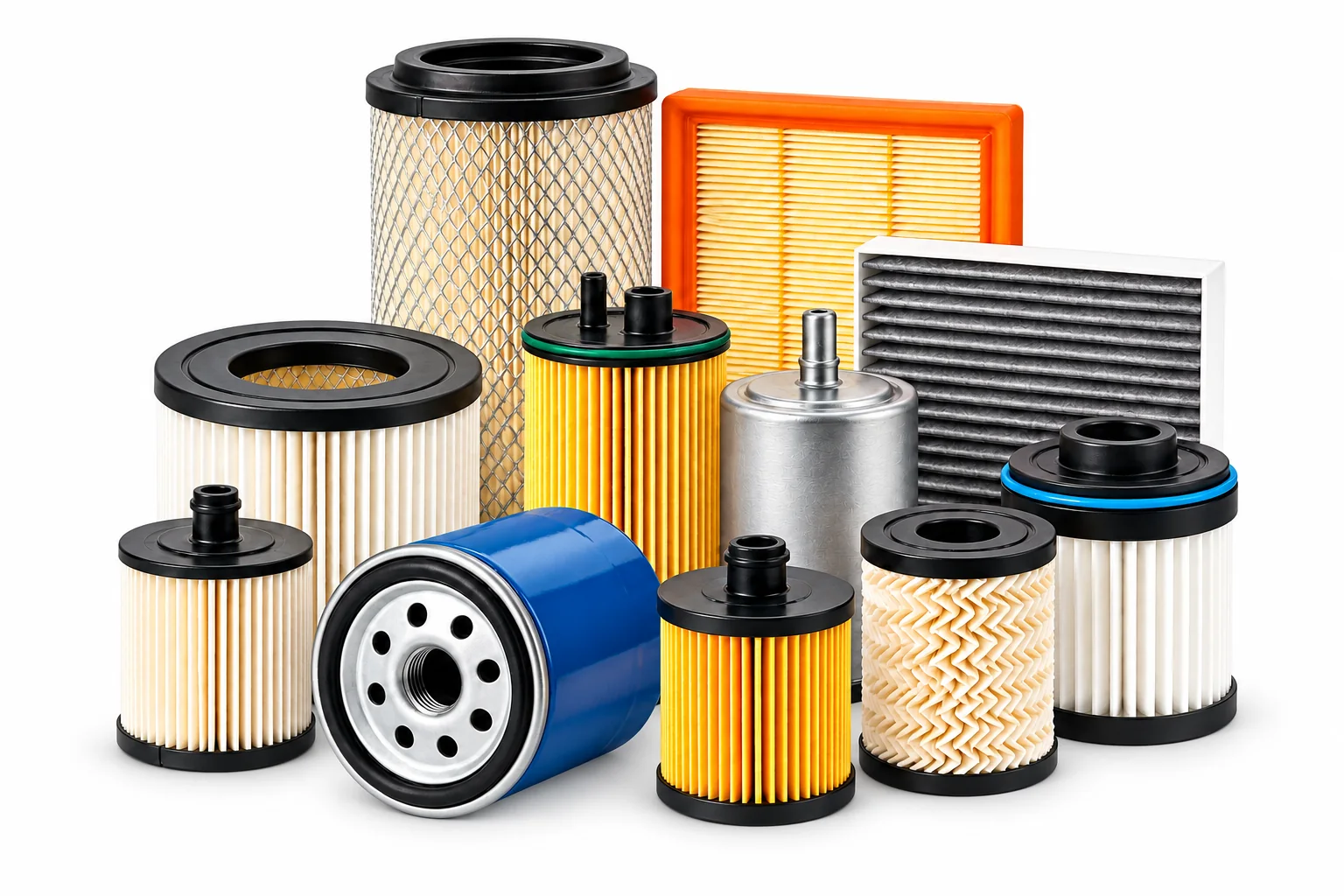
This guide is written for business buyers. Confirm product applications, technical data, commercial terms and market requirements with the selected supplier before ordering.
If you are sourcing wholesale automotive filters, the minimum order quantity (MOQ) is one of the first commercial details to clarify. But “What is your MOQ?” is not enough by itself. MOQ may be quoted per part number, product family, packaging version, or order line, so importers should confirm exactly what the figure applies to before planning a trial order.
Buyer takeaway: ask for the MOQ basis in writing, then compare it with your expected demand, pack configuration, branding needs, and replenishment plan. Do not assume that one supplier’s MOQ format matches another’s.
Why automotive filter MOQ can vary
An automotive filter supplier may need to quote separately for a standard catalog item and a project requiring customer-specific labels or cartons. The quantity can also be affected by whether the order is one SKU or a mixed list, how products are packed, and whether the requested item is currently available or needs a new production arrangement. These details are supplier- and product-specific; confirm them in the quotation rather than relying on a general rule.
Seven MOQ questions to ask before a trial order
1. Is MOQ per SKU, per filter type, or per purchase order?
Ask whether the stated quantity applies to each OE/OEM reference, each distinct filter model, or the total order. A “mixed order” may still have a minimum for every line item. Request the MOQ next to each SKU in your quotation sheet.
2. Does private-label packaging change the minimum?
Separate the product quantity from packaging requirements. Ask whether neutral packaging, a standard box, a custom printed box, or a customer label is available, and whether any packaging setup or artwork approval affects the order quantity. Do not treat custom packaging as included unless the supplier confirms it.
3. Can different references be combined?
If you need air, oil, fuel, and cabin air filters, ask whether the supplier can quote these product groups together and whether MOQ is still calculated line by line. Send a SKU list with the quantity requested for every part number rather than one combined total.
4. What does the quoted unit represent?
Confirm whether a quantity is counted as individual filters, pairs, sets, or packs, and ask how many units are in an inner pack and master carton. This prevents a mismatch between your purchase order, warehouse receiving records, and the supplier’s quotation.
5. Are samples available, and are they part of the bulk quantity?
Clarify sample availability, sample cost, shipping, and whether an approved sample is credited toward a later order. Record the sample’s part number and revision so the approved reference can be compared with the production order.
6. Are price tiers tied to the same specification?
When requesting tier pricing, compare like with like: the same filter reference, packaging, label, quantity unit, and delivery basis. Ask the supplier to show any quantity breaks and assumptions clearly; do not compare a neutral-box offer with a branded-box offer as though they were identical.
7. What should be reconfirmed for repeat orders?
Ask which details must be repeated on a reorder: SKU list, approved packaging artwork, destination, requested shipment window, or other project requirements. A written reorder record helps the buyer and supplier work from the same version of the specification.
A simple trial-order planning worksheet
Before contacting a filter manufacturer or wholesale supplier, prepare one row per reference with the expected demand period, requested quantity, package type, and confidence in the fitment data. Separate confirmed demand from a test quantity. If you are still validating a number or application, mark it as “to be confirmed” instead of quietly including it in a bulk commitment.
- Part number and OE/OEM or cross-reference source
- Filter category and application information, if verified
- Requested quantity per SKU and unit of measure
- Packaging and private-label requirements
- Destination market and preferred delivery terms
- Sample or approval requirements before the first order
For product identification, start with the relevant air filter, oil filter, fuel filter, or cabin air filter catalog and include the exact references in your request.
FAQ: Automotive filter minimum orders
Is there one standard MOQ for all automotive filters?
No single figure should be assumed for every supplier, part number, package, or project. Request the applicable MOQ for the specific SKU and packaging configuration you want.
Can I place a small trial order before a larger wholesale order?
Ask the supplier whether a trial quantity is available and what conditions apply. Confirm any sample, packaging, and freight costs before approving the order.
Does a larger quantity always mean a lower total cost?
Not necessarily. Compare the complete landed-cost assumptions, inventory exposure, packaging, and expected sell-through—not only the quoted unit price. Your customs broker or logistics provider can advise on destination-specific import costs.
Conclusion
A useful MOQ discussion is specific to the part number, packaging, quantity unit, and order structure. Make those assumptions visible before you approve a trial order, and keep the approved SKU and package details with your purchasing record.
Planning a wholesale automotive filter order? Send your part-number list, quantities by SKU, destination, and packaging brief through our Request a Quote page so the inquiry can be reviewed against the details you provide.
Fitment and commercial terms must be confirmed for each requested reference and destination. Third-party brand names and part numbers, if used, are for identification and cross-reference purposes only; no affiliation is implied.